2024 Competition
Second year as Drivetrain Lead, focusing on refinement and optimization of the electric platform. This year marked the team's first driverless-capable vehicle and advanced thermal management systems.
FSAE Competition History
A chronological overview of my involvement with the University of Toronto Formula Racing team, from UT22 to UT26, highlighting the evolution of vehicle performance, technical innovation, and leadership roles.
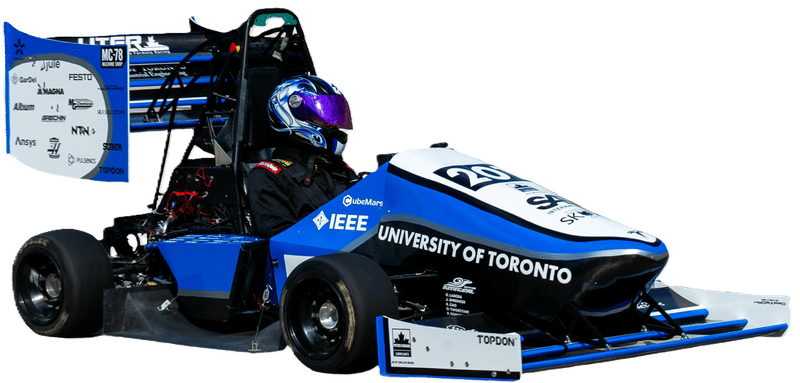
UT24 — 2024 Competition Car
2024Second year as Drivetrain Lead, focusing on refinement and optimization of the previous year's electric platform, including improvements in cooling, efficiency, and reliability.
Performance: 1st Overall at Formula Hybrid + Electric New Hampshire, 9th Overall at FSAE Michigan, and first driverless-capable vehicle in team history.
Impact: Achieved top-tier performance and reached design finals at both Michigan and New Hampshire competitions.
Simulation & Dynamics
Advanced simulation frameworks for vehicle performance analysis, from basic lap time optimization to integrated multi-physics modeling.

MATLAB Lap Simulation Development
2024Led the transition from commercial OptimumLap software to custom MATLAB lapsim framework, collaborating with suspension team to implement TTC tire models and establishing foundation for advanced vehicle dynamics simulation.
Impact: Established foundation for advanced simulation with 5% accuracy improvement through TTC tire model integration and custom MATLAB framework development
Thermal Management Systems
Comprehensive thermal engineering from component design to experimental validation and CFD optimization.
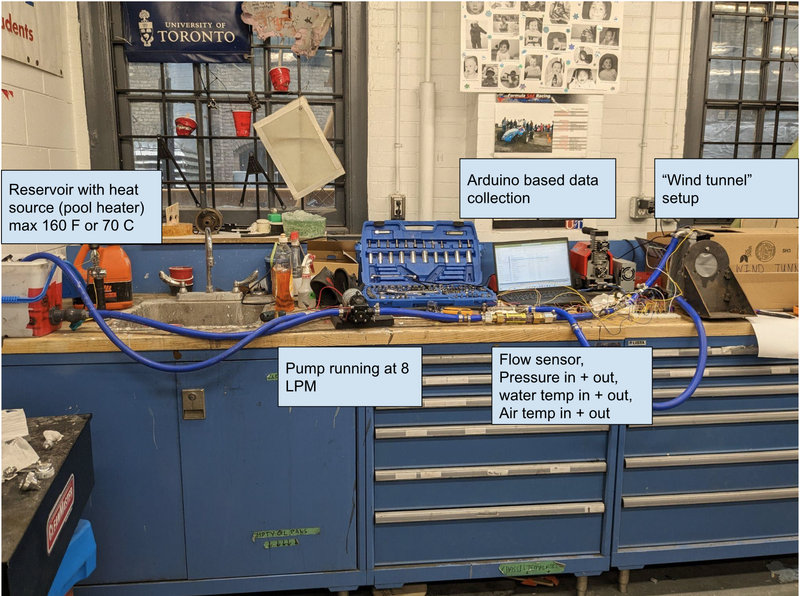
Radiator Characterization & Testing
2024Designed and built UTFR's first comprehensive radiator characterization test bench with custom circuit board for data acquisition, featuring 1 flow rate sensor, 2 pressure sensors, 2 water temperature sensors, 2 air temperature sensors, and hot wire anemometer - all logged directly to computer. This marked the first experimental radiator testing in team history and generated valuable thermal performance data.
Impact: Established experimental thermal testing capabilities and generated comprehensive radiator performance database for CFD validation and cooling system design

2024 Cooling System Design & Thermal Optimization
2024Advanced thermal management optimization using CFD analysis and experimental validation, building on the 2023 foundation with significantly improved routing and component placement to achieve 10% cooling efficiency improvement and 5°C temperature reduction.
Impact: Achieved 10% cooling efficiency improvement and 5°C motor temperature reduction through CFD-driven design optimization
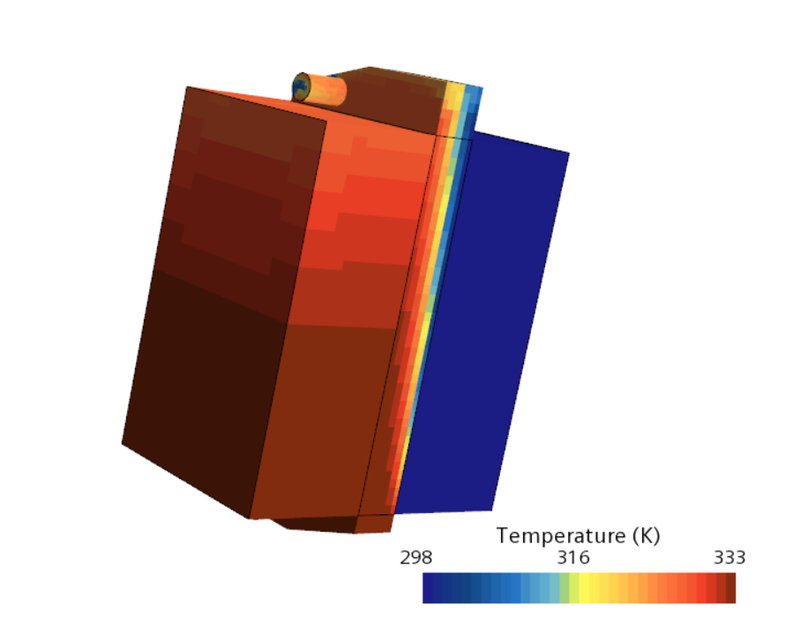
CFD Radiator Simulation
2024Developed STAR-CCM+ expertise for thermal analysis by creating a comprehensive radiator model using porous media approach, establishing foundation for advanced CFD thermal simulations in electric vehicle cooling systems.
Impact: Established STAR-CCM+ thermal analysis capabilities and created validated radiator model for cooling system optimization
Mechanical Design & CAD
Foundation of vehicle development through CAD modeling, component design, and manufacturing processes.

Drivetrain Harmonic Analysis
2024Comprehensive harmonic analysis of driveshafts and sprockets to prevent resonance failures. Performed hand calculations of critical speeds, ANSYS modal analysis, and fatigue evaluation, revealing driveshafts require 1,192,700 cycles at equivalent distance of 1,648 km to fail at natural frequency, which would require unrealistic vehicle speeds of 1,079 km/h.
Impact: Ensured drivetrain reliability by preventing resonance failures and validated exceptional component durability for FSAE competition conditions


Let's Connect
Whether you're a recruiter, fellow engineer, friend, or just a curious stranger, I'd love to hear from you.