Project Overview
As part of the UT24 FSAE vehicle development, I conducted comprehensive harmonic analysis on both the driveshafts and sprockets to ensure drivetrain reliability. This analysis was crucial for preventing catastrophic failures due to resonance and fatigue under competition loads.
Building on Previous Work: This harmonic analysis directly follows from the 2023 sprocket design and FEA analysis, extending the structural evaluation to dynamic loading conditions and vibration characteristics.
Analysis Methodology
The harmonic analysis followed a systematic approach:
Natural Frequency Determination
Calculated theoretical natural frequencies using beam theory and structural mechanics
ANSYS Modal Analysis
Validated natural frequencies through finite element modal analysis
Critical Speed Analysis
Determined operating speeds that could cause resonance and failure
Fatigue Analysis
Evaluated cyclic loading effects and component lifespan
Driveshaft Analysis
The driveshaft analysis focused on preventing resonance-induced failures:

Theoretical modal analysis calculations for driveshaft natural frequencies

Harmonic response calculations showing critical speed analysis

Campbell diagram showing critical speeds and operating ranges
Fatigue Analysis Results
The fatigue analysis revealed impressive durability:
Exceptional Fatigue Life
Driveshafts require 1,192,700 cycles at equivalent distance of 1,648 km to fail at lowest natural frequency (requiring vehicle speed of 1,079 km/h)
Sprocket Harmonic Analysis
The sprocket analysis examined vibration characteristics under dynamic loading:

ANSYS harmonic analysis results for sprocket vibration modes

Complete harmonic analysis results for driveshaft system
Key Findings
The analysis provided critical insights for drivetrain reliability:
- Resonance Avoidance: Operating speeds safely below all critical frequencies
- Fatigue Resistance: Components rated for extreme durability under competition conditions
- Vibration Control: Identified optimal mounting and damping strategies
- Design Validation: Confirmed structural integrity under dynamic FSAE loads
Impact on Vehicle Performance
This harmonic analysis ensured:
Related FSAE Projects

OptimumLap Lap Simulation & Drive Ratio Optimization
2023As drivetrain lead for the UT23 electric FSAE vehicle, advanced the team's simulation capabilities by pioneering comprehensive track mapping and points-based analysis for drive ratio optimization. While not the first to use OptimumLap, established systematic validation of tire models through autocross and endurance testing correlation.
Impact: Optimized drive ratios for electric FSAE vehicle across 4 international competitions, improving acceleration and top speed performance through validated simulation models

MATLAB Lap Simulation Development
2024Led the transition from commercial OptimumLap software to custom MATLAB lapsim framework, collaborating with suspension team to implement TTC tire models and establishing foundation for advanced vehicle dynamics simulation.
Impact: Established foundation for advanced simulation with 5% accuracy improvement through TTC tire model integration and custom MATLAB framework development
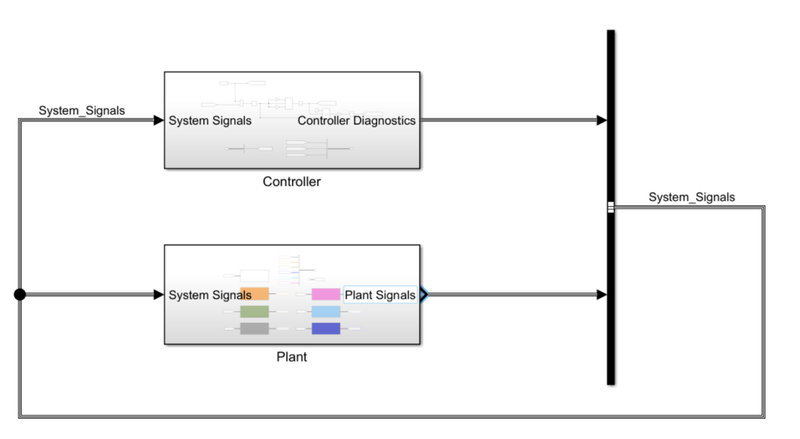
Integrated MATLAB Simulink Lap Simulation
2025Led development of integrated MATLAB Simulink framework advancing from steady-state to transient simulations, collaborating with powertrain and vehicle dynamics teams to integrate existing models and implement comprehensive multi-physics modeling with Vi-grade and Adams integration.
Impact: Established transient simulation capabilities enabling real-time analysis of complex vehicle dynamics, electrical systems, and thermal management interactions