Project Overview
As part of the 2024 FSAE thermal management optimization, I began developing expertise in STAR-CCM+ CFD software specifically for thermal analysis. This project focused on creating a comprehensive radiator model using porous media approach, establishing the foundation for advanced thermal simulations in our electric vehicle program.
Integration: This CFD radiator analysis directly supported the 2024 cooling system optimization by providing validated thermal performance data.
STAR-CCM+ Learning Journey
This project marked my introduction to STAR-CCM+ for thermal analysis, building upon the CFD foundations established in the cooling system optimization:
- Software Familiarization: Learned STAR-CCM+ interface and thermal analysis workflows
- Thermal Physics: Gained understanding of conjugate heat transfer, fluid dynamics, and porous media modeling
- Validation Methodology: Developed approach for correlating CFD results with experimental data
- Mesh Generation: Mastered meshing strategies for complex thermal geometries
Porous Media Radiator Model
The radiator model was developed using STAR-CCM+'s porous media capabilities to accurately represent the complex internal structure:
Geometric Representation
Modeled radiator as porous media zone representing fin and tube structures
Thermal Properties
Incorporated temperature-dependent material properties and heat transfer coefficients
Flow Characteristics
Defined pressure drop correlations and flow resistance based on experimental characterization
Simulation Results & Analysis
The CFD analysis provided detailed insights into radiator performance under various operating conditions:

Complete radiator model in STAR-CCM+ showing porous media representation and boundary conditions
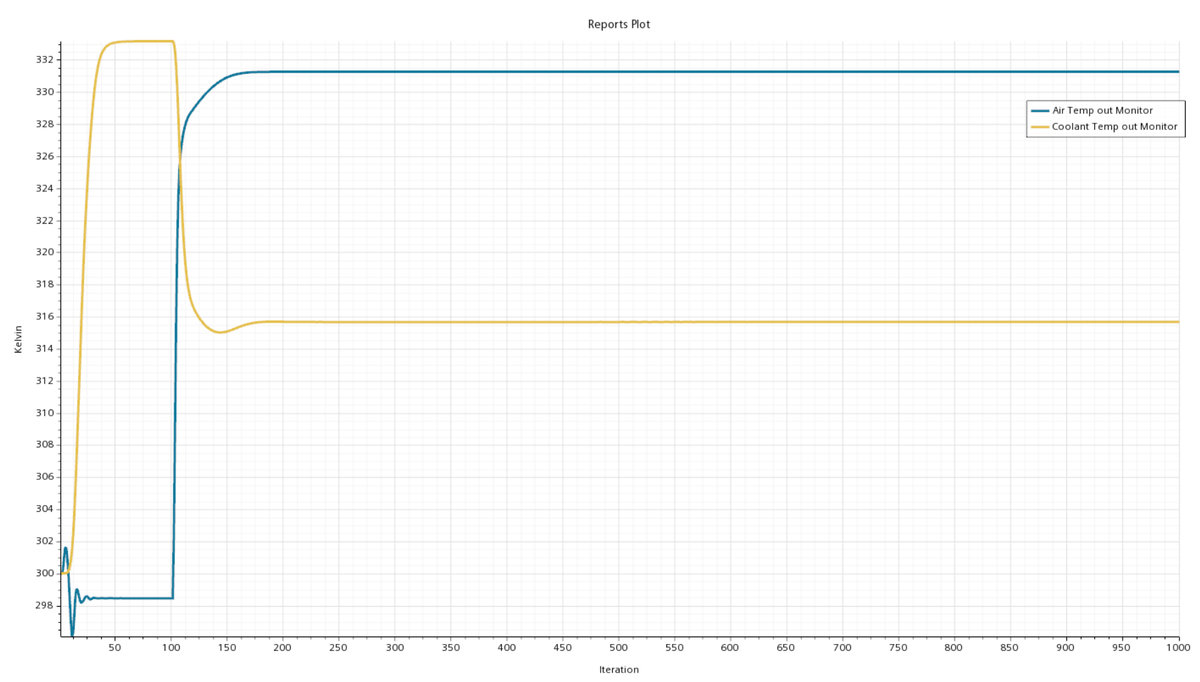
Temperature distribution plot showing heat transfer patterns and thermal gradients across the radiator
Technical Implementation
The simulation setup required careful consideration of multiple physics and numerical methods:
Impact & Future Applications
This foundational CFD work established capabilities for advanced thermal analysis:
- Created reusable radiator model for future thermal studies
- Developed STAR-CCM+ expertise for complex thermal simulations
- Established validation methodology for CFD thermal predictions
- Provided data for cooling system optimization decisions
- Foundation for full vehicle thermal management CFD studies
Integration: This CFD radiator analysis directly supported the 2024 cooling system optimization by providing validated thermal performance data.
Related FSAE Projects

2023 Cooling System Design
2023Initial cooling system architecture and component selection.
Impact: Designed complete cooling loop for a first year electric FSAE vehicle, ensuring adequate thermal management for motor and battery systems under competition conditions
Radiator Characterization & Testing
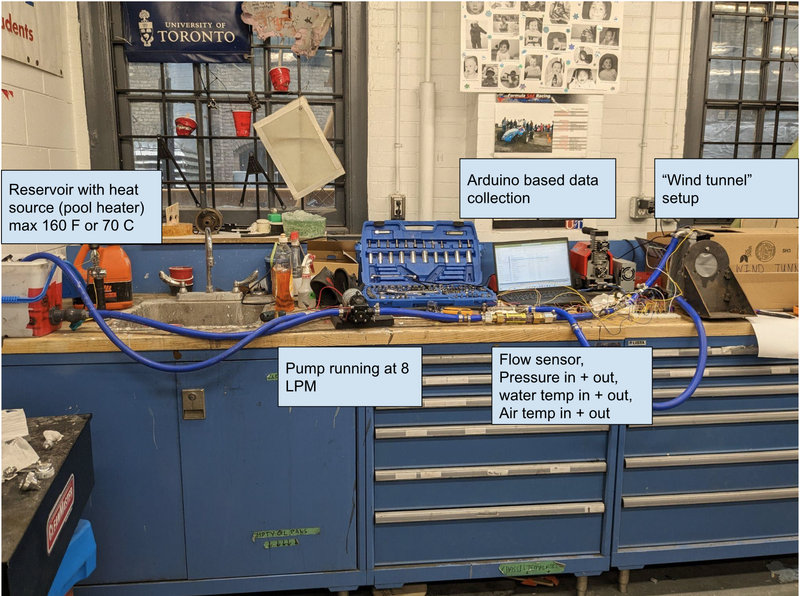
2024Designed and built UTFR's first comprehensive radiator characterization test bench with custom circuit board for data acquisition, featuring 1 flow rate sensor, 2 pressure sensors, 2 water temperature sensors, 2 air temperature sensors, and hot wire anemometer - all logged directly to computer. This marked the first experimental radiator testing in team history and generated valuable thermal performance data.
Impact: Established experimental thermal testing capabilities and generated comprehensive radiator performance database for CFD validation and cooling system design

2024 Cooling System Design & Thermal Optimization
2024Advanced thermal management optimization using CFD analysis and experimental validation, building on the 2023 foundation with significantly improved routing and component placement to achieve 10% cooling efficiency improvement and 5°C temperature reduction.
Impact: Achieved 10% cooling efficiency improvement and 5°C motor temperature reduction through CFD-driven design optimization