Further Development: This foundational cooling system design will be optimized in 2024 with improved thermal modeling and performance data.
Project Overview
As drivetrain lead for the UT23 FSAE competition, I led the design of our team's first comprehensive electric vehicle cooling system. This was a milestone year for our program - not only was it my first year in a leadership role, but it marked the first time we had a running electric car. The cooling system was designed with a pragmatic approach: create a functional system that works reliably, with optimization and refinement planned for future years as we gather more thermal data and gain better understanding of our powertrain architecture.
Design Philosophy
The 2023 cooling system followed a "design to work" philosophy rather than optimizing for peak efficiency:
- Focus on reliability and functionality over optimization
- Conservative thermal margins to ensure competition reliability
- Modular design allowing for future improvements and data-driven optimization
- Integration with overall vehicle packaging and space constraints
Two-Loop Architecture
We implemented a dual-loop cooling system to separately manage the thermal requirements of different powertrain components:
- Motor Loop: Dedicated cooling circuit for the electric motor, managing high heat loads during acceleration and hill climbing
- Inverter Loop: Separate circuit for power electronics, maintaining optimal operating temperatures for semiconductor components
- Independent Operation: Each loop operates independently, allowing for different flow rates and temperature control strategies
- Future Expansion: Architecture designed to accommodate additional cooling requirements as the powertrain evolves
Full CAD Integration
For the first time in our program's history, the entire cooling system was fully modeled in CAD. This comprehensive approach provided significant benefits:
- Accurate space claim analysis for packaging integration
- Early identification of interference issues with other vehicle systems
- Improved collaboration with other engineering teams (chassis, suspension, aerodynamics)
- Better understanding of hose routing, pump placement, and radiator positioning
- Foundation for future thermal simulation and CFD analysis
System Design & Integration

Complete cooling system architecture showing dual-loop design with motor and inverter circuits
Impact & Results
The 2023 cooling system established critical foundations for our electric vehicle program:
- Successful operation of our first running electric FSAE vehicle
- Reliable thermal management during competition events
- Established CAD-based design methodology for future cooling systems
- Created thermal data collection framework for optimization in subsequent years
- Demonstrated effective cross-team integration and space management
Next Development: This cooling system foundation will be enhanced in 2024 with advanced thermal modeling and performance optimization based on competition data.
Related FSAE Projects
Radiator Characterization & Testing
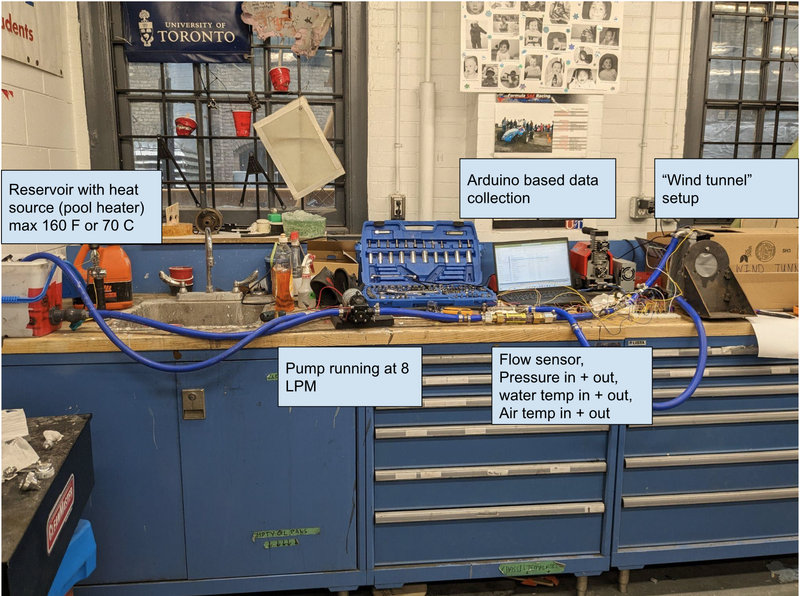
2024Designed and built UTFR's first comprehensive radiator characterization test bench with custom circuit board for data acquisition, featuring 1 flow rate sensor, 2 pressure sensors, 2 water temperature sensors, 2 air temperature sensors, and hot wire anemometer - all logged directly to computer. This marked the first experimental radiator testing in team history and generated valuable thermal performance data.
Impact: Established experimental thermal testing capabilities and generated comprehensive radiator performance database for CFD validation and cooling system design

2024 Cooling System Design & Thermal Optimization
2024Advanced thermal management optimization using CFD analysis and experimental validation, building on the 2023 foundation with significantly improved routing and component placement to achieve 10% cooling efficiency improvement and 5°C temperature reduction.
Impact: Achieved 10% cooling efficiency improvement and 5°C motor temperature reduction through CFD-driven design optimization
CFD Radiator Simulation
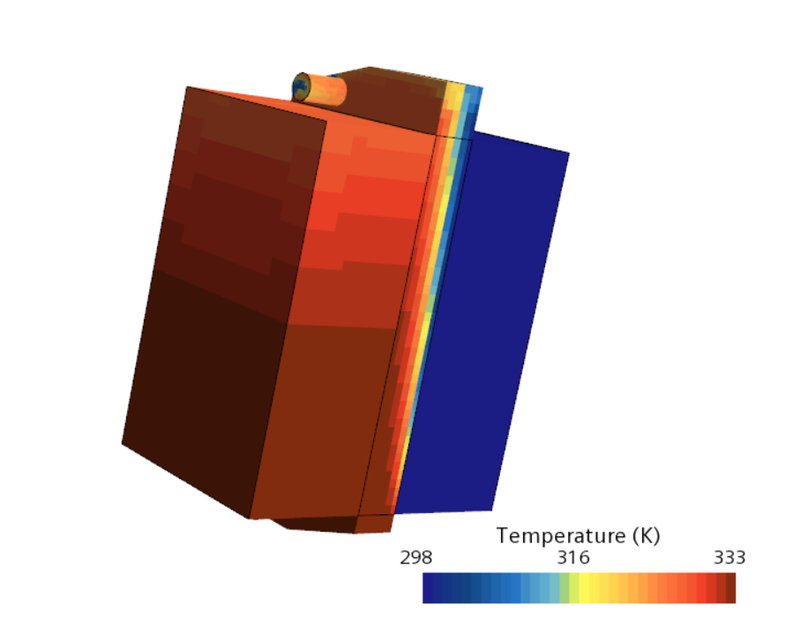
2024Developed STAR-CCM+ expertise for thermal analysis by creating a comprehensive radiator model using porous media approach, establishing foundation for advanced CFD thermal simulations in electric vehicle cooling systems.
Impact: Established STAR-CCM+ thermal analysis capabilities and created validated radiator model for cooling system optimization